
Vol. 1 No. 1 (2024): Balangkas
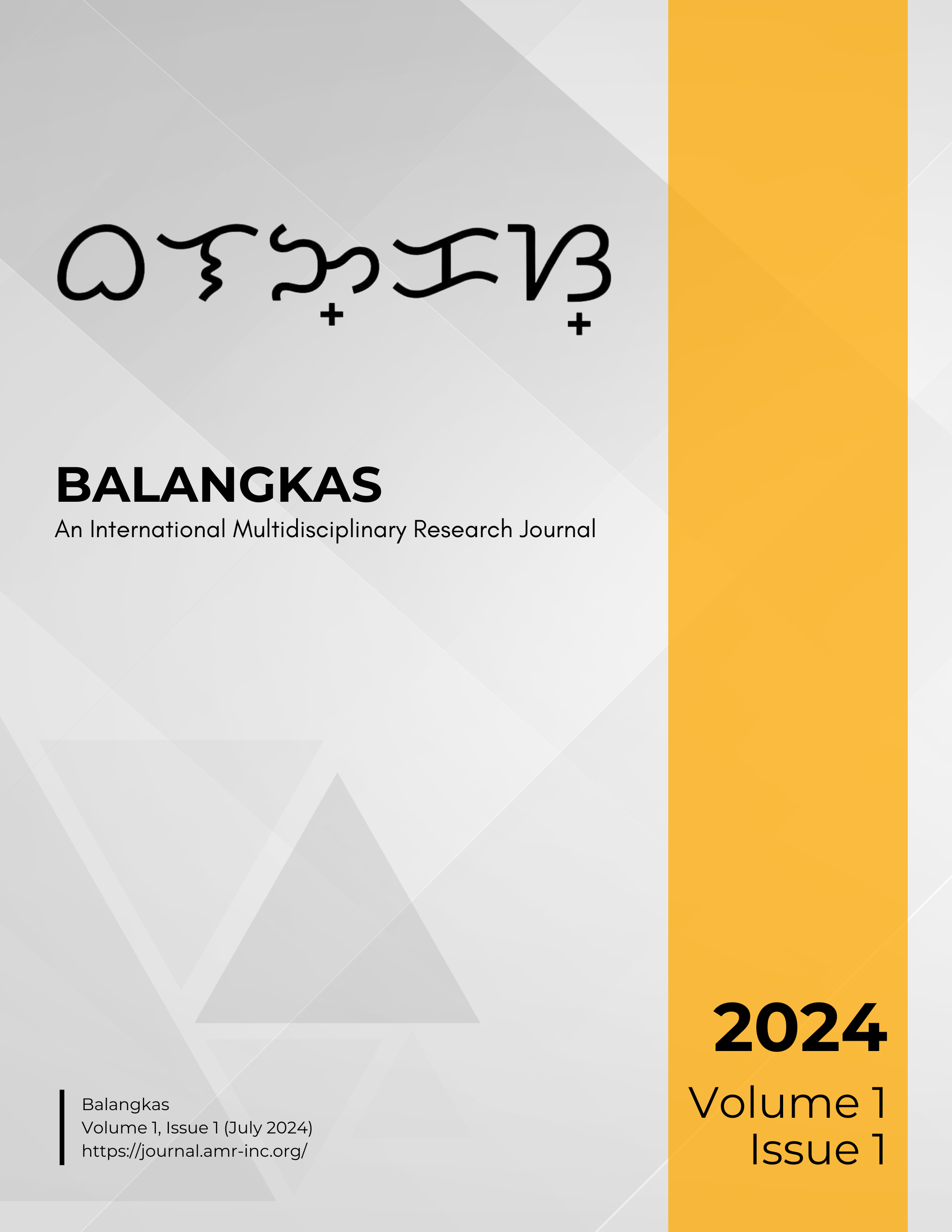
Published:
2024-07-31
Editorial Note
-
Editorial Note
Prof. Hadi Susilo Arifin, Ph.D. Institut Pertanian Bogor IndonesiaDear Readers,
With great pride and privilege, we present the inaugural issue of Balangkas: An International Multidisciplinary Research Journal. As the Editor-in-Chief, I feel very humbled and honored to present this new journal, which will spread and flourish with high-quality research emanating from diverse academic faculties.
At the core of Balangkas is the serious recognition that there is a need for a platform beyond academic boundaries to create a collaborative environment for differences in perspectives and ideas. Our journal encourages multidisciplinary and transdisciplinary research in the spirit of knowledge sharing to address complex global challenges. Balangkas aims to contribute toward an integrated understanding and solving crucial world problems. It will publish four issues per year quarterly, with releases in January, April, July, and October. This regular flow ensures constant innovative research and supports the best review process for a good turnaround time for our contributors.
Balangkas, as an open-access journal, leads the way in making scientific knowledge available to everyone, increasing authors’ work visibility and impact. We believe in open access as one of the most fundamental means toward a universal and just community in the academy. The scope of Balangkas is purposely broad enough to embrace most subjects that include, but are not limited to, Social Sciences, Natural Sciences, Agricultural Sciences, Education, Engineering, Humanities, and Health Sciences. These multidisciplinary and transdisciplinary approaches are believed to encourage cross-discipline dialogue and integration of diverse perspectives to successfully cope with the multiple facets of contemporary research questions. We are particularly keen on studies that would build bridges across the disciplines and their contribution to fresh ideas and innovative solutions to global problems.
In this inaugural issue, we proudly present a slate of articles reflecting the variety and richness of multidisciplinary and transdisciplinary research. These studies help to enrich knowledge within specific disciplines and pay attention to how interdisciplinary collaboration can sow seeds for new understanding and innovative pathways. The topics range from educational strategies and cognitive development to advancements in artificial intelligence and sustainable environmental practices. Each article has passed through a rigorous peer-review process; it is, by default, the highest academic standard for the research communicated.
Looking into the future, we see Balangkas as a dynamic and adapting platform that adjusts to the continually shifting circumstances of academic research. We work hard to maintain the integrity and quality of our publication at a level that will be advanced by these changes in research in the ever-changing world of methodologies, technologies, and views. As we grow, we aim to foster a vibrant community of scholars dedicated to knowledge-building and creating positive societal transformation.
We are open to contributions from all over the world on Balangkas. By submitting your research to us, you become a part of a broad international learning community searching for knowledge and ways to improve society. Let us together build a journal that will be recognized as the epitome of world-class academia and set as a herald of impactful change.
Indeed, from the bottom of my heart, I appreciate each of the authors, reviewers, and members of the editorial board who, by now, are all invited to launch their collaborative effort in bringing Balangkas this far. Your dedication, commitment, quality of work, and expertise remain critical to seeing Balangkas through. We look forward to your continued support and collaboration as we embark on this exciting journey. Thank you for joining us in this inaugural issue of Balangkas: An International Multidisciplinary and Transdisciplinary Research Journal.
We hope that you find the articles both enlightening and inspiring, and we encourage you to engage with the research and ideas presented within these pages. We aim to make our mark in the world; let us push the frontiers of knowledge.
Views: - Downloads: -Original Research Articles
-
Exploring Motivation among EFL Undergraduate Students: A Self-Determination Theory Perspective
Ilyas Nur Muhammadin Universitas Negeri Yogyakarta Indonesia , Rozanah Katrina Herda Universitas Negeri Yogyakarta IndonesiaMotivation is essential for effective language acquisition, yet many EFL (English as a foreign language) students struggle to maintain it throughout their learning journey. This study explores the role of Self-Determination Theory (SDT) in enhancing motivation among EFL students. The primary research question addressed is: How does SDT influence motivation among EFL students? Additionally, the study investigates two sub-questions: What are the key factors that affect motivation in EFL learning environments? How are autonomy, competence, and relatedness, as described by SDT, applied in teaching methodologies? For this purpose, journal articles from several databases (Google Scholar, JSTOR, Science Direct, and Semantic Scholar) were reviewed, and 43 articles were analyzed using the systematic review method. The findings highlighted that highly motivated learners exhibit greater engagement, determination, and better learning outcomes. Motivation is dynamic and influenced by various factors, with SDT emphasizing the importance of autonomy. Students who feel empowered and in control of their learning are more intrinsically motivated. Autonomy, combined with feelings of competence and relatedness, further boosts motivation. The study reveals that moving beyond traditional teacher-centered approaches is crucial, advocating for student-centered methodologies such as cooperative learning and task-based learning. These approaches grant students autonomy and foster competence and relatedness through collaboration and peer interaction. Autonomy-supportive teaching practices—including providing choices, clear explanations, and a supportive environment—are essential for meeting students’ psychological needs and enhancing intrinsic motivation. Ultimately, fostering intrinsic motivation in EFL students through SDT principles and student-centered methodologies creates a more conducive learning environment, leading to improved learning outcomes. Further research should investigate the interplay between SDT principles, individual differences, cultural contexts, and teaching methodologies to enhance our understanding of motivation in diverse EFL settings.
Pages: 1-9Views: - Downloads: -Exploring Writing Strategies of Two Sophomore Students of a State University in the Philippines: A Case Study on its Implications for Pedagogical Support and Cognitive Awareness
Isabelita Bodbod University of Science and Technology of Southern Philippines PhilippinesWriting is considered to be one of the most essential tools for the academic survival of every student that is also very relevant when they step into the world of work. Thus, this study investigated the use of writing strategies by the sophomore students of a university in Claveria, Misamis Oriental, Philippines. Two respondents were selected in this mini-qualitative exploratory case study that took advantage of individual face-to-face interviews and casual conversations using open-ended questions with direct quotations. Findings disclosed that the willingness to incorporate other resources was taken optimistically during planning. Revision was given a positive outlook, while evaluation was recognized in the form of re-reading. With this, two themes emerged from the analysis of the data. First, the pedagogical support that refers to a reinforcement of other sources in writing helped a lot in the development of respondents’ writing skills and cognitive awareness of respondents’ weaknesses and incompetence in writing. Therefore, instructors should provide students with extensive exposure to writing through various classroom activities and opportunities. In this way, they can empower the students by assuming full responsibility.
Pages: 10-16Views: - Downloads: -Subject-Specific Preparedness in Social Work Licensure Exams: Are Students Equally Prepared?
Sunshine L. Caballero Bachelor of Science in Social Work, College of Arts and Sciences, University of Science and Technology of Southern Philippines-Claveria, Misamis Oriental Philippines Philippines , Fe B. Agad Bachelor of Science in Social Work, College of Arts and Sciences, University of Science and Technology of Southern Philippines-Claveria, Misamis Oriental Philippines Philippines , Venjie J. Navales Bachelor of Science in Social Work, College of Arts and Sciences, University of Science and Technology of Southern Philippines-Claveria, Misamis Oriental Philippines Philippines , Arnel Travero Research Program Officer, College of Arts and Sciences, University of Science and Technology of Southern Philippines-Claveria, Misamis Oriental, Philippines Philippines , Loveleih G. Quemado Professor, Graduate School Department, Notre Dame of Marbel University, Koronadal City, Philippines PhilippinesThis study examined the preparedness of the first graduating class of a Bachelor of Science in Social Work (BSSW) program at a State University in Claveria, Misamis Oriental, Philippines, in taking the Social Worker Licensure Examination (SWLE). Researchers used a descriptive-comparative design to assess 106 third-year students' performance across three SWLE areas: Human Behavior & Social Environment (HBSE), Social Welfare Policies & Programs (SWPP), and Social Work Methods (SWM). The findings showed that most students are unprepared in the three (3) subject areas. Moreover, with p<0.0001, significant differences in student performance were found, with SWPP (knowledge-based) scoring highest, followed by HBSE and then SWM. Several factors may explain these variations, including subject complexity, teaching methods that potentially benefited HBSE with interactive learning, student interest and prior knowledge, and curriculum sequencing, showing a strong HBSE foundation being crucial for SWM. The study recommends incorporating interactive learning strategies in HBSE online courses, catering to diverse learning styles, and leveraging student interest. Additionally, reviewing curriculum sequencing and implementing ongoing evaluation and faculty development programs could better prepare students for the SWLE and their social work careers.
Pages: 17-24Views: - Downloads: -College Instructors’ Assessment Literacy, Technological, Pedagogical and Content Knowledge (TPACK): Predictors of Students’ Academic Performance and Engagement
MARIBETH CABREJAS LICEO DE CAGAYAN UNIVERSITY PhilippinesIn an ever-changing landscape of dynamic teaching techniques and rapidly advancing technology, college educators stand as architects of knowledge, shaping tomorrow's leaders through innovative approaches that transcend traditional teaching paradigms. This study addressed the pressing need to harmonize assessment literacy with technological, pedagogical, and content knowledge (TPACK) to foster student engagement and academic success. The study employed a correlational design, a quantitative research method, conducted across multiple colleges within a private higher education institution located in Cagayan de Oro City during the second semester of the 2023-2024 academic year. The sample size, determined using Andrew Fisher’s formula, consisted of 134 students representing various academic disciplines. Descriptive statistics such as mean, standard deviation, frequency, and percentage to determine college educators’ assessment literacy and Technological, Pedagogical, and Content Knowledge (TPACK) and Inferential statistics such as multiple regression were used to determine which variable predicts students’ performance and engagement. The study's findings revealed that instructors have moderate assessment literacy and excel in teaching, particularly in technological and pedagogical knowledge. However, students expressed lower confidence in their instructors' content knowledge. Despite this, students demonstrated high academic performance, with many excelling and showing strong emotional engagement in their educational activities. The research underscored the critical role of instructors' technological knowledge in boosting student academic achievement, highlighting the imperative for technological proficiency in the educational sector. Students demonstrated substantial emotional investment in their learning activities, reflecting consistently high engagement levels. Furthermore, the study found that while assessment literacy, technological expertise, and pedagogical knowledge positively influence student engagement, content knowledge surprisingly detracts from it. The conclusion asserts that enhancing technological proficiency among instructors is essential for improving student performance and engagement, encouraging educators to prioritize this aspect to achieve superior educational outcomes.
Pages: 25-32Views: - Downloads: -Natural Language Processing of Gemini Artificial Intelligence Powered Chatbot
Sultan AlGhozali Universitas Negeri Yogyakarta Indonesia , Siti Mukminatun Universitas Negeri Yogyakarta IndonesiaNatural Language Processing (NLP) created Gemini AI-powered chatbot, a powerful tool that assists humans in many sectors. This article explains the Natural Language Processing in Gemini from various theories from books and papers along with usage examples from different education sectors. This article will analyze 20 kinds of literature on the topic categorized in NLP, AI, and Gemini AI-powered chatbot. NLP lets AI communicate naturally and as humanely as possible when interacting. The findings of this article is 1) Primary NLP functionalities to help Gemini address a variety of client needs and ensure that it can comprehend them or make quick responses in different communication environments, methods such as machine translation and text summarization are employed; 2) Human-computer interaction (HCI): The review’s goal was to determine how Gemini can have user-friendly and natural conversations through HCI principles. This includes knowing what the user wants to do, giving suitable replies, and making the interaction seem effortless; 3) Methods for managing conversations AI integrated application has a big difference in core processing with the normal software, Gemini uses an algorithm as the main power to calculate the possible response for the users and give the most suitable response regarding the request or question. Gemini uses machine learning with the information provided related to human needs, leading to more users using many discourses of human-bot. This advancement often raises a question about how Gemini works and processes data and has proven very useful for humans. Much research investigates the real usage of AI in real-life situations, however, a deeper understanding of the fundamentals of language processing by investigating further the topic of the possibilities of many Gemini usages will be unlocked.
Pages: 41-48Views: - Downloads: -Action Research
-
TRASH (Transformation and Resilience towards Advancing Sustainable Habits) Project: A Waste Management Classroom Innovation for Young Eco-Champions
Marridel L. Piedad Administrative Officer II, Camp Evangelista Elementary School, Cagayan de Oro City, Philippines Philippines , Nancy T. Rubin Master Teacher II, Balubal Elementary School, Cagayan de Oro City, Philippines PhilippinesThis study examined the impact of the TRASH Project, a classroom-based innovation designed to promote proper waste management habits among Grade 2 learners. Qualitative data were collected from teachers, parents, and students involved in the program. Thematic analysis revealed positive outcomes across all participant groups. Teachers observed a significant reduction in classroom waste and the development of proper waste disposal habits among students. Parents reported that these habits extended to the home environment, demonstrating the program's ability to foster long-term behavioral change. Students expressed a newfound sense of environmental responsibility and appreciation for the program, indicating the potential for cultivating a love for the environment. Through achieving its core objectives of promoting waste management habits, environmental awareness, and reduced classroom litter, the TRASH Project demonstrates promise in fostering responsible waste management practices in young learners. While the qualitative data provides valuable insights, future research will incorporate quantitative methods for a more comprehensive evaluation. The project's scope will be expanded to encompass the entire school, and its content will be further refined based on the findings. Additionally, new waste management innovations will be developed, and future evaluations will employ both quantitative and qualitative assessments to ensure program improvement and generalizability.
Pages: 33-40Views: - Downloads: -
Make a Submission
Register
IMPORTANT REMINDER
Authors interested in submitting manuscripts to the journal are requested to read the registration instructions by clicking this button.

Open Access

eISSN
ISSN: 3116-3351 (Online)
Indexing and Archiving










Plagiarism Checker
Keywords
Published by:
Nathaniel E. Quimada
Balangkas: An International Multidisciplinary Research Journal
Poblacion, Claveria, Misamis Oriental, 9004, Philippines
Email: balangkas@amr-inc.orgCounter Installed: June 2025
Sanguline Theme by Sangu Ilmu
-